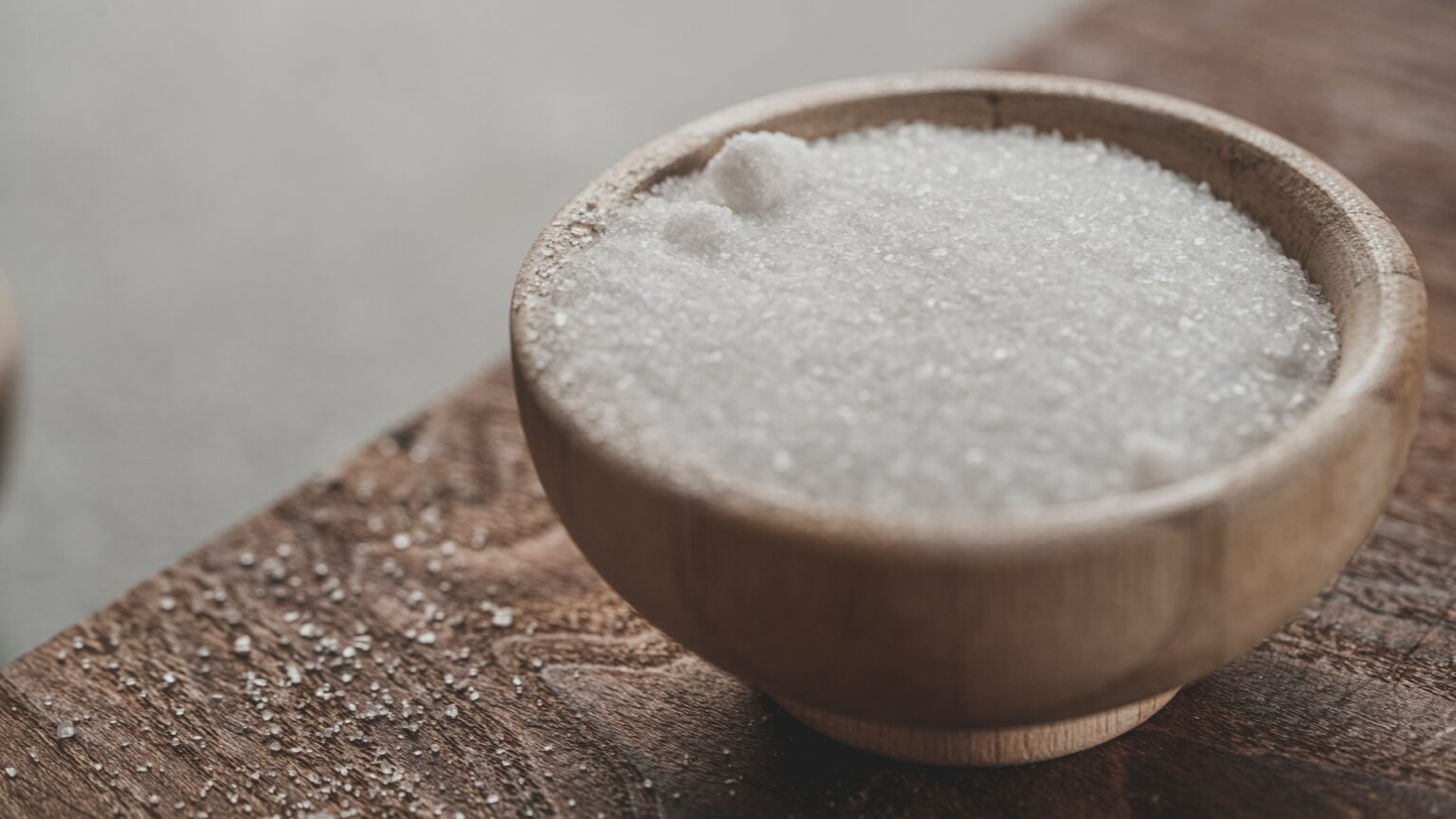
Cooking with salt is an essential part of creating delicious and well-balanced dishes. Salt has been used for thousands of years as a preservative and flavor enhancer, and it is still one of the most commonly used ingredients in kitchens around the world.
When used correctly, salt can bring out the natural flavors of ingredients and help to balance the other flavors in a dish. But using too much salt or adding it at the wrong time can ruin a dish and make it unpalatable. In this blog post, we’ll explore the importance of salt in cooking and provide some tips on how to use it effectively.
Why is salt important in cooking?
Salt plays several important roles in cooking. First, it enhances the natural flavors of ingredients. Salt can help to bring out the sweetness in fruits and vegetables, and it can balance the bitterness in coffee and chocolate. It also enhances the umami flavor in meats and other savory dishes.
Salt also has a preserving effect. By drawing out moisture from foods, salt can help to inhibit the growth of bacteria and other microorganisms. This is why salt has been used for centuries as a preservative for meats, fish, and other perishable foods.
Finally, salt is essential for human health. It is an electrolyte that helps to regulate the balance of fluids in the body, and it is necessary for proper nerve and muscle function. While too much salt can be harmful, most people need some salt in their diet to maintain good health.
What is Salt?
Salt is a mineral: sodium chloride. The human body can’t store much salt, so we need to consume it regularly in order to be able to carry out basic biological processes. Our bodies are hardwired to crave salt to ensure we get enough of it.
Where does it come from?
All salt comes from the ocean. It can be a huge ocean like the Atlantic or a small body of sea water. Salt is what’s left behind when seawater evaporates. Rock salt is mined from ancient lakes and seas, some of which now lie far underground. Here in Utah, where I live, is the home of ‘Real Salt’ that has an assortment of trace minerals that give the salt it’s light pink hue and is mined from the ancient salt bed.
What is the purpose of salt in cooking?
Salt amplifies flavor. Samin Nosrat says “A smaller amount of salt applied while cooking will often do more to improve flavor than a larger amount added at the table.” When cooking pasta or vegetables you will need to add a generous palmful of salt. This may seem like a lot of salt, but most of the salt will end up going down the drain with the cooking water. Most anything you cook at home is lower in sodium than processed, prepared, or restaurant food.
What’s the best salt to use in cooking?
There are so many varieties of salt to choose from and depending on how they are processed will determine which salt you will choose to cook with. Finely ground salts are dense, so they tend to contain more sodium than coarser salts. Also that sodium content can vary widely among brands.
Processed Salt
The most widely used, table salt, is extracted from underground salt deposits. It is heavily processed to remove impurities, which may also remove trace minerals. It is then ground very fine. Iodine, a trace mineral, was added to salt in 1925 to prevent goiter and hypothyroidism, medical conditions caused by iodine deficiency. Table salt also often contains an anticaking agent such as calcium silicate to prevent clumps from forming. This creates a ‘metallic’ taste to the salt. Table salt has the highest amount of sodium per teaspoon than any other salt.
Natural Salt
Sea salt is produced by evaporating ocean or sea water. It is also composed mostly of sodium chloride, but sometimes contains small amounts of minerals like potassium, zinc, and iron depending on where it was harvested. Because it is not highly refined and ground like table salt, it may appear coarser and darker with an uneven color, indicating the remaining impurities and nutrients. The coarseness and granule size will vary by brand.
Kosher Salt
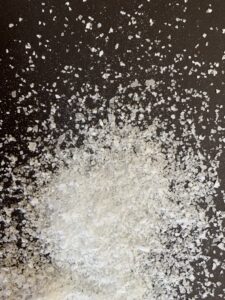
Samin Nosrat says “There are two major producers of kosher salt: Diamond Crystal, which crystallizes in an open container of brine, yielding light and hollow flakes. Diamond Crystal is formed by a patented method in which “upside-down pyramids are stacked one over the next to form a crystal. Morton, is made by rolling cubic crystals of vacuum-evaporated salt into thin dense flakes.” What this means is that you cannot swap out one for the other without adjusting the amounts. Nosrat also notes that Diamond Crystal dissolves much more quickly than Morton. “The more quicky salt dissolves, the less likely you are to over season a dish, thinking it needs more salt when actually the salt just needs more time to dissolve.”
A word about measuring salt
Measurements of different salt are not always interchangeable in recipes. Generally, sea salt and table salt can be interchanged if the granule size is similar. However, table salt tends to have more concentrated, saltier flavor than kosher salt, so the substitution is (approximately) one teaspoon of table salt for about 1.5 to 2 teaspoons of kosher salt depending on the brand. If you’re baking, it’s best to weigh your salt.
This is the salt I use for everyday cooking
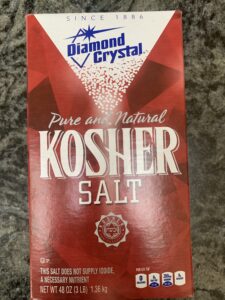
My brand of choice to cook with is Diamond Crystal Kosher Salt. It is a kosher salt, pure salt taste and coarse texture. It has the lowest sodium per teaspoon, 53% less sodium than any table salt and it dissolves quickly. It also sticks to food much better because of the smaller crystals, so your salt will not fall off in the pan, it will stay on the food. As a rule of thumb, Utah Dinner Project’s recipes are tested with Diamond Crystal, unless it says otherwise.
In conclusion, cooking with salt is an essential part of creating delicious and well-balanced dishes. Salt enhances the natural flavors of ingredients, balances other flavors, and is necessary for good health. By using salt effectively in your cooking, you can take your dishes to the next level and impress your family and friends with your culinary skills.